Brain Fog Is Not the Problem. It Is the Signal.
I have lived with brain fog for most of my life. It started after a childhood trauma and worsened through years of antibiotic overuse. This is my attempt to understand what is actually happening, and why treating the fog itself misses the point entirely.
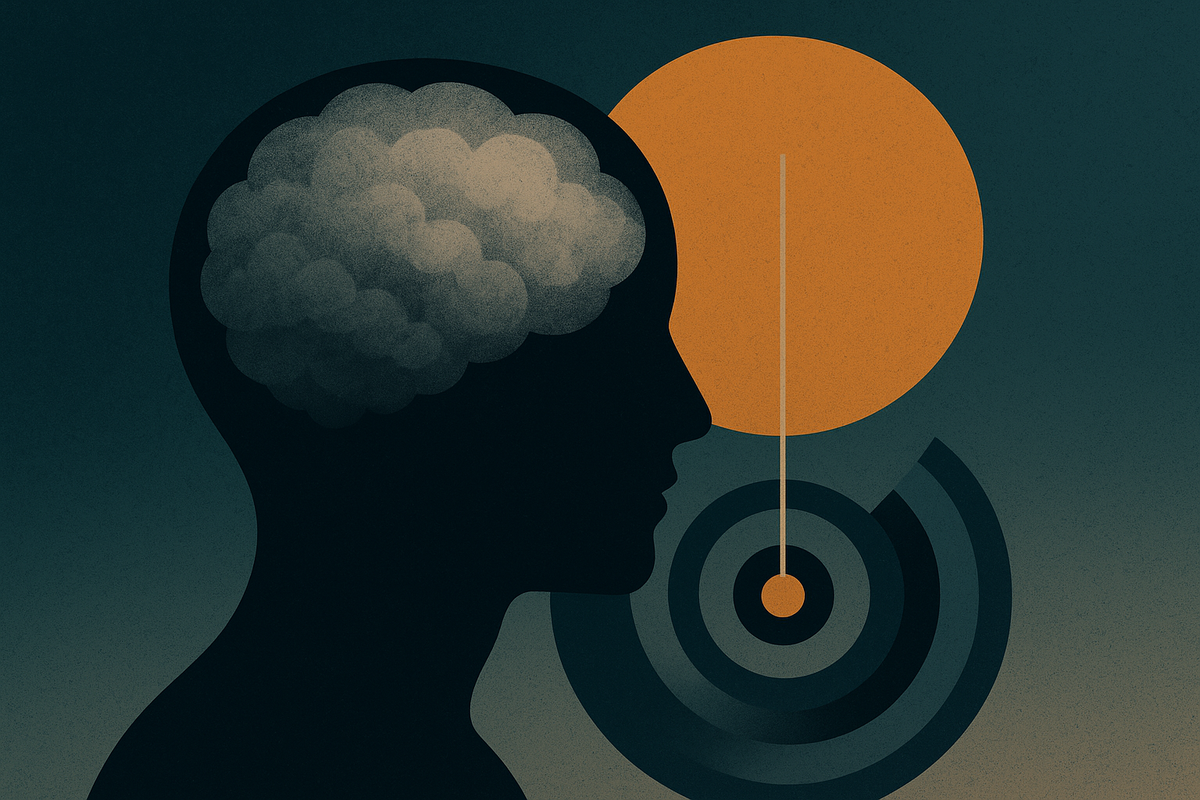
I have lived with brain fog for most of my life. It started in my early teens, a couple of years after a significant childhood trauma. Right around the same time, I started getting very sick, and over the next four or five years I was prescribed more than thirty rounds of antibiotics.
I am now decades past those years, and the fog has not lifted. If anything, it has gotten worse. I still function. I have built a career, led teams, solved complex problems. But I do all of it through a filter that never fully clears. There is a version of me on the other side of this fog that I have never met, and I sometimes wonder what he could do.
For most of those years, I treated brain fog as the problem. Something to push through, compensate for, or occasionally medicate away. It took a long time, and a lot of research, to understand that brain fog is not the problem at all. It is a signal. A downstream indicator that something upstream, possibly several things, has been failing for a very long time.
This post is my attempt to map what I have learned about those upstream failures, how they connect, and why I believe they trace back to two events in my childhood that set off a cascade my body has never fully resolved.
The Cascade Theory
Here is what I believe happened, assembled from years of research, reading, and pattern recognition across hundreds of sources now organized in my research vault.
A severe traumatic event in childhood dysregulated my nervous system at a critical developmental age. Within a couple of years, repeated illness and aggressive antibiotic treatment destroyed my gut microbiome during the same developmental window. These two events, one neurological and one gastrointestinal, were not separate problems. They were the opening moves in a chain of biological failures that reinforced each other and compounded over time.
Trauma destabilized the nervous system. A destabilized nervous system impaired gut function. Antibiotics destroyed the gut flora that was already under stress. A damaged gut increased systemic inflammation. Chronic inflammation crossed the blood-brain barrier. And the brain, starved of energy and flooded with inflammatory signals, did what it is designed to do under those conditions: it throttled itself.
That throttling is what I experience as brain fog.
What Trauma Does to the Nervous System
The research in my vault on PTSD as a biological disorder paints a picture that is more structural than psychological. During extreme trauma, the hippocampus (responsible for contextualizing memories in time) goes offline while the amygdala encodes the experience as a raw threat, without temporal context. The result is a memory that is not properly "filed." It does not fade into the past the way normal memories do. It stays present, perpetually active, as if the threat is still happening.
This is not elevated stress. It is a permanent remodeling of stress-response circuitry. The autonomic nervous system locks into sympathetic overdrive because the vagus nerve, which normally acts as the brake pedal signaling safety, loses function. Cortisol curves invert: high at night when you should be recovering, low during the day when you need to function. BDNF, the protein responsible for the brain's ability to repair and rewire itself, drops by as much as 40%.
For a child whose nervous system is still developing, this remodeling is not temporary. It becomes the architecture.
The Vagus Nerve: Where Everything Connects
The more I research, the more the vagus nerve appears as the central highway in this entire cascade. It is the longest cranial nerve in the body, running from the brainstem to the gut, and 80% of its fibers carry signals upward, from gut to brain.
When vagal tone is healthy, the vagus nerve does several critical things:
- It signals the amygdala and hippocampus that the body is safe, allowing the stress response to stand down
- It drives the parasympathetic "rest, digest, and recover" system
- It produces acetylcholine, which is strongly anti-inflammatory, inhibiting mast cells, macrophages, and overactive immune responses
- It carries neurotransmitter signals from the gut (where 90% of the body's serotonin is produced) to the brain
When vagal tone collapses, all of these functions degrade simultaneously. The amygdala stays hyperactive. The body cannot shift out of fight-or-flight. Inflammation runs unchecked because the cholinergic anti-inflammatory pathway is offline. And the gut-brain communication channel, the one carrying serotonin, dopamine, GABA, and other critical signals, goes dark.
Trauma can collapse vagal tone. And once it collapses in a developing child, rebuilding it is not straightforward.
What Thirty+ Rounds of Antibiotics Actually Do
Layer the gut destruction on top of the nervous system damage, and the cascade accelerates.
The gut microbiome is not a nice-to-have. It is a neurotransmitter factory. It produces 90% of the body's serotonin, along with dopamine, GABA, and oxytocin. These chemicals do not just affect mood. They are the signaling molecules that the vagus nerve carries to the brain. Without them, the brain is not just emotionally impaired. It is chemically starved.
Antibiotics can eradicate beneficial bacteria overnight. And critically, research in my vault indicates that these populations often do not recover spontaneously. Thirty-plus rounds of antibiotics in a developing teenager does not just temporarily disrupt the microbiome. It can permanently alter its composition, creating chronic dysbiosis that persists for decades.
The downstream effects:
- Reduced neurotransmitter production (less serotonin, dopamine, and GABA reaching the brain)
- Gut barrier breakdown ("leaky gut"), allowing inflammatory compounds to enter the bloodstream
- Nutrient malabsorption, further depriving the brain and body of raw materials for repair
- Pathogenic bacteria migrating into the small intestine, creating additional inflammation
The gut was already under stress from a nervous system stuck in sympathetic overdrive. The antibiotics finished what the trauma started.
Inflammation: The Self-Reinforcing Loop
This is where the cascade becomes self-sustaining, and where I believe the real damage accumulates over decades.
A compromised vagus nerve cannot produce enough acetylcholine to keep inflammation in check. A damaged gut is leaking inflammatory compounds into the bloodstream. The immune system, no longer properly regulated, produces elevated levels of cytokines (CRP, TNF-alpha, IL-6) that cross the blood-brain barrier and trigger neuroinflammation.
Inside the brain, the inflammatory response causes microglia, the brain's immune cells, to shift from repair mode to attack mode. Instead of cleaning up damaged tissue, they begin destroying it. BDNF, already reduced by the trauma, drops further. The hippocampus, which needs BDNF to generate new neurons and consolidate memories, degrades. Myelin, the insulating layer around neural connections, thins, making signal transmission slower and less reliable.
And the inflammation feeds on itself. Inflammatory damage to mitochondria reduces ATP production (the cell's energy currency). With less energy available, the brain cannot properly clear glutamate from synapses after firing. Glutamate accumulates, causing excitotoxicity, a process where neurons are essentially overstimulated to death. The brain responds by throttling activity to prevent further damage.
That protective throttling, the brain deliberately slowing itself down to survive, is brain fog.
Brain Fog as a Feature, Not a Bug
This reframing changed how I think about what I experience every day. Brain fog is not a malfunction. It is the brain's last line of defense against a cascade of upstream failures. It is doing exactly what it should do under the circumstances: reducing activity to prevent irreversible damage from excitotoxicity and oxidative stress.
The problem is not the fog. The problem is everything that makes the fog necessary.
And that is why treating brain fog directly, with stimulants, nootropics, or willpower, misses the point. You are overriding a safety mechanism without addressing why the safety mechanism activated in the first place. It is like disconnecting the smoke alarm because the noise is annoying, while the house is still on fire.
What I Am Researching Now
If the cascade theory is correct, the path forward is not one intervention. It is addressing the upstream failures in the right order:
- Vagus nerve restoration: My vault contains research on evidence-based tools for vagal stimulation, cold exposure protocols, specific breathing techniques, and physical manipulation methods that may improve vagal tone over time
- Gut microbiome rebuilding: Targeted probiotics, dietary changes, and potentially fecal microbiota research. The challenge is that the gut ecosystem may require extended periods to rebalance, and effects regress when interventions stop
- Inflammation reduction: Both through the vagus nerve pathway (restoring cholinergic anti-inflammatory signaling) and through direct intervention (my vault has extensive research on compounds like KPV, glutathione, and dietary approaches)
- Mitochondrial support: Restoring ATP production so the brain has the energy to clear glutamate, synthesize neurotransmitters, and support repair processes
- BDNF restoration: Rebuilding the brain's capacity to rewire damaged circuits and generate new neurons in the hippocampus
Each of these is a deep topic on its own, and I expect to write about them individually as my research develops. The point of this post is not to present solutions. It is to present the map.
The Honest Part
I have been living with this for decades. I have built a life around it, over it, through it. Most people who know me professionally would never guess that I operate through a permanent cognitive filter. I have gotten very good at compensating.
But compensating is not the same as healing. And the fog is getting worse, not better, as I get older. The cascade does not stop on its own. Inflammation compounds. Mitochondria degrade. The systems that were damaged in childhood do not spontaneously repair themselves decades later.
Writing about this is not easy. There is more to the story than I am ready to share publicly. But the part I can share, the biological cascade, the systems thinking, the research, that part might be useful to someone else who is living through the same fog and does not understand why.
Brain fog is not laziness. It is not lack of discipline. It is not something you push through with enough coffee. It is your brain protecting itself from damage that you may not even know is happening. And the first step toward addressing it is understanding that the fog is not the problem. It is the signal.
Listen to the signal.
This is Signal and Noise. This topic is firmly Signal & Noise: a pattern has emerged, it is grounded in real biology, but the causal chain connecting my specific history to my specific symptoms remains my interpretation, not clinical proof. That honesty is the point.
The content on this site reflects personal experience and personal research. Nothing here constitutes medical advice or professional recommendations. For the full disclaimer, see the About page.