What Happens When AI Reads Your Entire Medical History (Something No Doctor Ever Has)
I spent fifteen years and close to sixty thousand dollars collecting medical data across a dozen practitioners. No single doctor ever saw all of it. Then I pointed AI at the complete dataset.
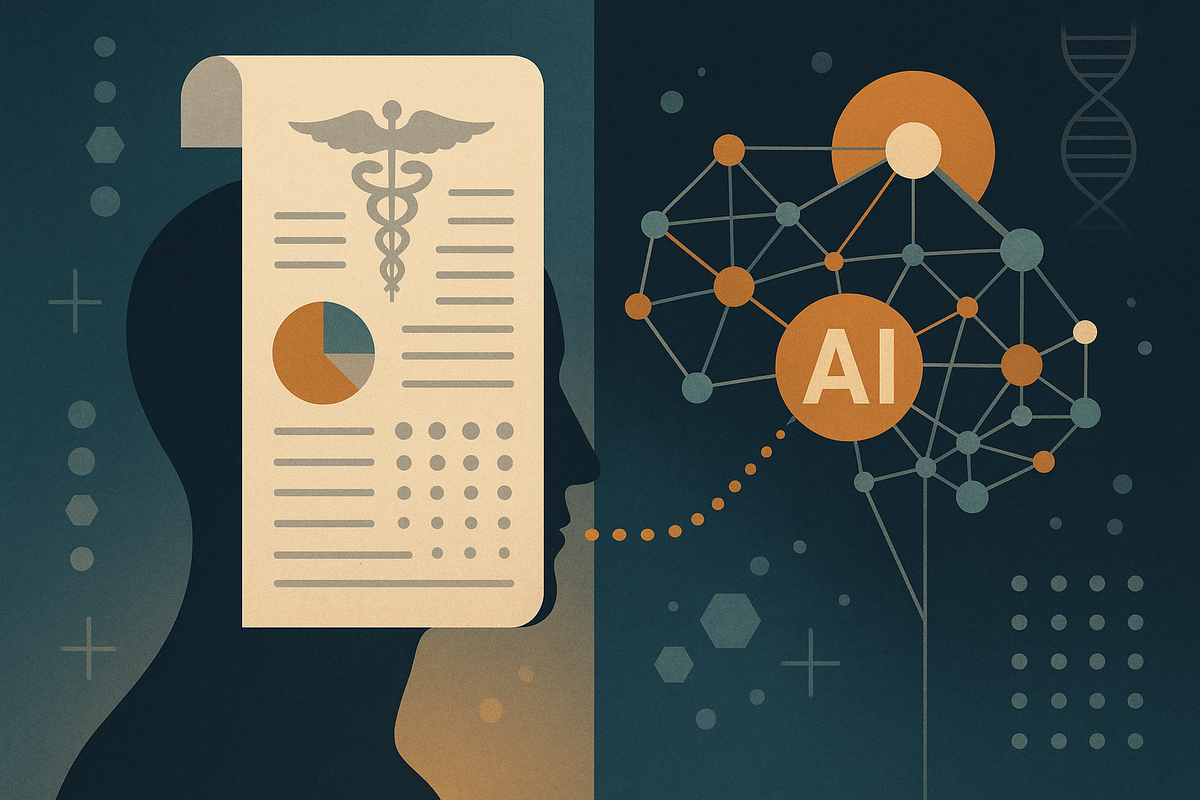
I have been collecting medical data for over fifteen years. Not the kind your primary care doctor orders once a year and glances at for thirty seconds. The kind you have to seek out on your own. The kind insurance does not cover. Organic acids panels, intracellular nutrient assays, genetic methylation profiles, neurotransmitter panels, complement activation markers, hair mineral analysis, stool DNA sequencing, salivary cortisol curves. Hundreds of tests and records in total, across more than a dozen practitioners, spanning 2012 through 2025.
When I add up the out-of-pocket costs over the years, the tests themselves, the specialist fees (many of these practitioners charge several hundred to a thousand dollars per session and do not take insurance), the supplements and interventions that followed, the overnight studies, the gadgets, the travel, it probably comes to somewhere between fifty and sixty thousand dollars. That number sounds dramatic, but it accumulates quietly over fifteen years: a $1,200 comprehensive nutrient panel here, a $500 specialist visit there, a $500-a-month supplement protocol for a year. It is not one dramatic expense. It is a long, steady bleed that most insurance plans do not cover because functional and integrative medicine largely exists outside the system.
And until last week, I had never seen all of it together. That is not unusual. It is how the system works for almost everyone.
The Fragmentation Problem
This is the part nobody talks about when they tell you to "be your own advocate." You can be the most informed, most persistent patient in the room, and it will not solve the structural problem at the center of modern medicine: specialists see slices.
The endocrinologist sees the thyroid. The immunologist sees the complement markers. The functional medicine doctor sees the organic acids and stool tests. The geneticist sees the SNPs. Each one is competent within their domain. Many of them were excellent. But none of them held the full picture, because the full picture did not exist in any single place.
I had results from Dr. C., a functional medicine practitioner, Dr. B.'s thyroid workups, Dr. L.'s immunoglobulin panels, a Pharmasan neurotransmitter test, two Genova NutrEval panels, three Metametrix GI Effects tests, a Great Plains organic acids test, a SpectraCell intracellular nutrient panel, a 23andMe genetic report run through three different interpretation services, a Vitamin Diagnostics methylation panel, a ZRT cortisol test, hair analysis, heavy metal testing, IGeneX Lyme panels, food sensitivity tests, and more. Stacks of PDFs. Handwritten notes from appointments. Some of it was in medical portals, some in OneNote, some in filing cabinets I had not opened in years.
Each test told a piece of the story. No practitioner had ever read more than three or four of them together.
The Vault
I have written before about the research pipeline behind this site, how I built a system that captures, transcribes, analyzes, and organizes research content into a structured knowledge base. That vault now contains over ten thousand notes across wellness, technology, and other domains.
But my personal test data was not in the vault. It was scattered across the formats and locations where it had accumulated over the years: PDF reports from labs, OneNote notebooks from a decade ago, scanned documents, exported portal data. Legacy data in legacy formats, disconnected from each other and from the research that might give them context.
So I imported it. All of it.
I built a pipeline to pull medical records from OneNote, extract the structured data from PDFs, and organize everything into a dedicated section of the vault. Hundreds of records, spanning fifteen years, tagged and structured so that an AI could read them the way no human ever had: all at once, cross-referencing everything against everything else.
What AI Found in One Session
I pointed AI at the complete dataset and asked it to cross-reference all findings. Within a single working session, patterns started falling out of the data that had been sitting in my filing cabinet for over a decade, waiting for someone to read all the pages at the same time.
The Triple Blockade
Three of my tests, taken by three different doctors at three different times, each identified a problem with a different cofactor for the same enzyme: dopamine beta-hydroxylase, which converts dopamine to norepinephrine.
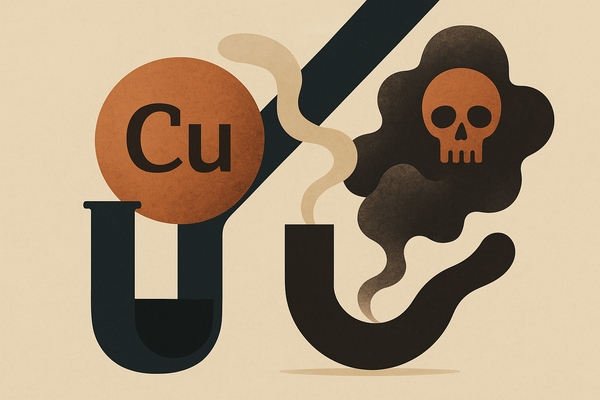
- A 2015 intracellular nutrient panel showed copper deficiency. Copper is a required cofactor for dopamine beta-hydroxylase.
- An organic acids test from the same year showed vitamin C at literally zero (reference range 10-200). Vitamin C is another required cofactor for the same enzyme.
- The same organic acids test showed a bacterial metabolite called 4-hydroxyphenylacetic acid at six times the upper limit. This metabolite, produced by Clostridia bacteria in the gut, directly inhibits that same enzyme.
Three independent mechanisms, from three different biological systems (mineral status, vitamin status, and gut microbiology), all converging on one enzyme. No single doctor saw all three findings together because no single doctor ordered all three tests. The connections were invisible until someone read the complete dataset.
The confirmation was on another test entirely: a neurotransmitter panel from 2014 showed dopamine low and norepinephrine even lower, with a ratio confirming impaired conversion. The enzyme was blocked, and the downstream chemistry proved it.
This pattern directly explains the brain fog I have lived with for decades. Not one cause. Three causes hitting the same target simultaneously.
Genetics Predicted What Labs Confirmed (Years Apart)
My 23andMe data was processed in 2014. My lab tests spanned 2012 through 2025. When the AI read them together, it found that genetic predictions and lab confirmations matched up across years and different testing methodologies:
- A genetic variant (BCMO1, homozygous) predicted I could not efficiently convert beta-carotene to vitamin A. A 2015 intracellular test confirmed functional vitamin A deficiency. The genetic data had been sitting in a file for a year before that lab test was even ordered, but no one connected them.
- Compound heterozygous MTHFR variants predicted impaired methylation. A 2012 methylation panel showed every folate form low, SAMe low, and reduced glutathione low. A 2025 comprehensive panel showed homocysteine still elevated at 15.5 more than a decade later. Same bottleneck, still active.
- A CBS variant predicted excessive transsulfuration. Two NutrEval panels confirmed taurine at 2.4 times the upper limit and methionine at the floor of its reference range. The shunt was real, and it was depleting the precursors needed to make neurotransmitters.
- An HLA haplotype flagged genetic susceptibility to biotoxin illness. Inflammatory markers confirmed active CIRS (chronic inflammatory response syndrome) with complement activation at 3.2 times the upper limit.
These are not subtle correlations. They are direct, mechanistic predictions confirmed by objective lab measurements. But the genetic data and the lab data were never in the same room until an AI read them together.
The Decade-Long Trajectory
With fifteen years of data visible at once, trends emerged that no single snapshot could reveal:
A measure of gut health called the Firmicutes-to-Bacteroidetes ratio went from normal in 2012 to essentially zero by 2015, with multiple beneficial species undetectable. The gut immune marker secretory IgA spiked from a normal 61 to over 2,200, indicating massive immune activation. The gut did not just decline; it collapsed, and the trajectory was only visible across three tests spanning three years.
Triglycerides, a marker of metabolic health, progressed from 120 to 157 to 269 across the early testing period. A 2025 comprehensive panel showed them at 383. Fifteen years of steady worsening, invisible on any single test, obvious when plotted together.
A thyroid conversion marker (Free T3) dropped from 3.1 to 2.7 while its antagonist (Reverse T3) climbed from 20 to 25 between 2012 and 2014. Then in 2025, Free T3 appeared at 3.4, the highest value in my own testing history. Something had improved, likely the vitamin A supplementation I started based on the BCMO1 genetic finding. Cause and effect, separated by years, connected by data.
Two Root Causes, Not Forty Symptoms
The most significant finding was not any single connection. It was the synthesis.
For years, I had what felt like forty separate problems: brain fog, arthritis, sleep disruption, fatigue, nutrient deficiencies, hormonal depletion, gut issues, inflammation, metabolic dysfunction. Each felt like its own condition requiring its own intervention.
When the AI traced the causal chains upstream, the forty problems collapsed into two root causes and one amplifier:
Root cause one: A genetic immune system that cannot clear biotoxins (HLA haplotype), combined with methylation variants that impair detox, neurotransmitter synthesis, and nutrient processing. This is the permanent vulnerability. The loaded gun.
Root cause two: The destruction of the gut microbiome from over thirty rounds of antibiotics, which allowed pathogenic bacteria to fill the vacuum, produce neurotoxins, degrade nutrient absorption, and fuel systemic inflammation. This is the trigger that was pulled, likely beginning with a severe waterborne exposure in adolescence on a small island in the Aegean, where I unknowingly drank from a contaminated open well for years. The parasites from that water were still detectable in my system nearly three decades later.
The amplifier: Chronic HPA axis dysregulation from childhood trauma, which locked the stress response into a pattern of flat cortisol curves, depleted pregnenolone (the precursor to every stress and sex hormone), and disrupted sleep architecture at the neurochemical level.
Everything else, the brain fog, the joint inflammation, the metabolic syndrome, the low testosterone, the sleep problems, traces back to these three things through documented, mechanistic pathways. Not speculation. Documented lab values connected to documented genetic variants connected to documented symptoms.
The shift from "I have forty problems" to "I have two root causes with forty downstream effects" is the difference between being lost and having a map.
The Good News Nobody Expected
In the middle of this analysis, something remarkable emerged from the 2025 data.
A coronary artery calcium scan came back at zero. Literally zero. No calcified plaque in any coronary vessel. This is the best possible result, and at age 55 with a family history of significant heart disease, more than a decade of worsening lipid markers, and an atherogenic particle profile that looks alarming on paper, it was genuinely surprising.
A neurofilament light chain test, which measures debris from damaged neurons in the blood, came back at 1.2 pg/mL, well within normal and at the low end. This biomarker rises years before clinical neurodegeneration in conditions like Alzheimer's and Parkinson's. A value this low at 55 is strong evidence that the brain fog is functional (the neurons are alive but underperforming due to the chemical environment) rather than structural (neurons dying). The hardware is intact. The software is glitching.
A comprehensive autoimmune panel testing eighteen separate antibody markers came back completely clean. Despite over a decade of severe arthritis and multiple genetic variants associated with autoimmune risk, there is no antibody-mediated autoimmune disease. The inflammation driving the arthritis is innate immune activation (from the CIRS), not the body attacking itself.
Biological age measured 4.9 years younger than chronological age. Cancer screening was negative. Kidney, liver, and pancreas function were all pristine.
The body, it turns out, is remarkably resilient. It has been fighting this battle for decades and holding the line in ways that the individual symptoms obscure.
What This Is Not
I want to be direct about the limitations.
This is not a story about AI replacing doctors. But I should be honest about how this data was collected. Some of these tests were ordered by forward-thinking functional medicine and naturopathic practitioners who already had them in their arsenal. Others I found myself, through years of online research, patient advocacy forums, and listening to people who were figuring things out on their own. Some I ordered directly through consumer lab sites and paid out of pocket because no doctor in my network knew the test existed or would agree to order it. The dataset is a product of both good practitioners and personal stubbornness. AI did not diagnose me. It connected data that was already there but had never been read as a single document.
This is not a validated clinical methodology. It is one person's medical data analyzed by one AI system in one session. The patterns are coherent and mechanistically plausible, but they have not been subjected to peer review, clinical validation, or any process that would qualify them as medical evidence.
This is not medical advice. If you see yourself in any of these patterns, that is worth exploring with your own practitioners, not acting on because someone on the internet described something similar.
What This Is
This is a proof of concept.
There are millions of people with chronic, complex conditions who have accumulated years of test data across multiple practitioners. That data sits in portals and filing cabinets and shoeboxes, fragmented by provider, fragmented by time, never read as a whole.
The tools to synthesize that data now exist. The cost of running an analysis like this is trivial compared to the cost of the tests themselves. The technical barriers are real but falling. What I built with a research pipeline and a structured vault, someone else will build as a product within a few years.
The question is not whether AI can find patterns in longitudinal medical data. It can. The question is what we do with that capability, how we validate it, how we prevent it from becoming another source of noise, and how we make it accessible to people who did not spend sixty thousand dollars and fifteen years collecting the data.
I do not have answers to those questions yet. But I have a vault full of data, a set of hypotheses that are more coherent than anything I have had before, and a testing plan to validate or refute them. The next round of labs will tell me whether the patterns the AI found in historical data hold up against current measurements.
If they do, the implications extend well beyond my own case. If AI can connect dots across hundreds of tests and fifteen years for one person, it can do it for anyone with the data. And "anyone with the data" is a population that grows every year as direct-to-consumer testing, wearables, and personal health records become more common.
The signal was always there. It was just scattered across too many pages for any one reader to find it.
This is Signal & Noise: the genetic variants are confirmed in my own data, the lab findings are objective measurements from certified laboratories, and the mechanistic connections between them are grounded in published biochemistry. The synthesis linking all of these into a unified causal framework is my interpretation, constructed by AI from the complete dataset, coherent and testable but not yet clinically validated. Upcoming lab results will either confirm or challenge these patterns.
The content on this site reflects personal experience and personal research. Nothing here constitutes medical advice or professional recommendations. For the full disclaimer, see the About page.